

Multimedia Area
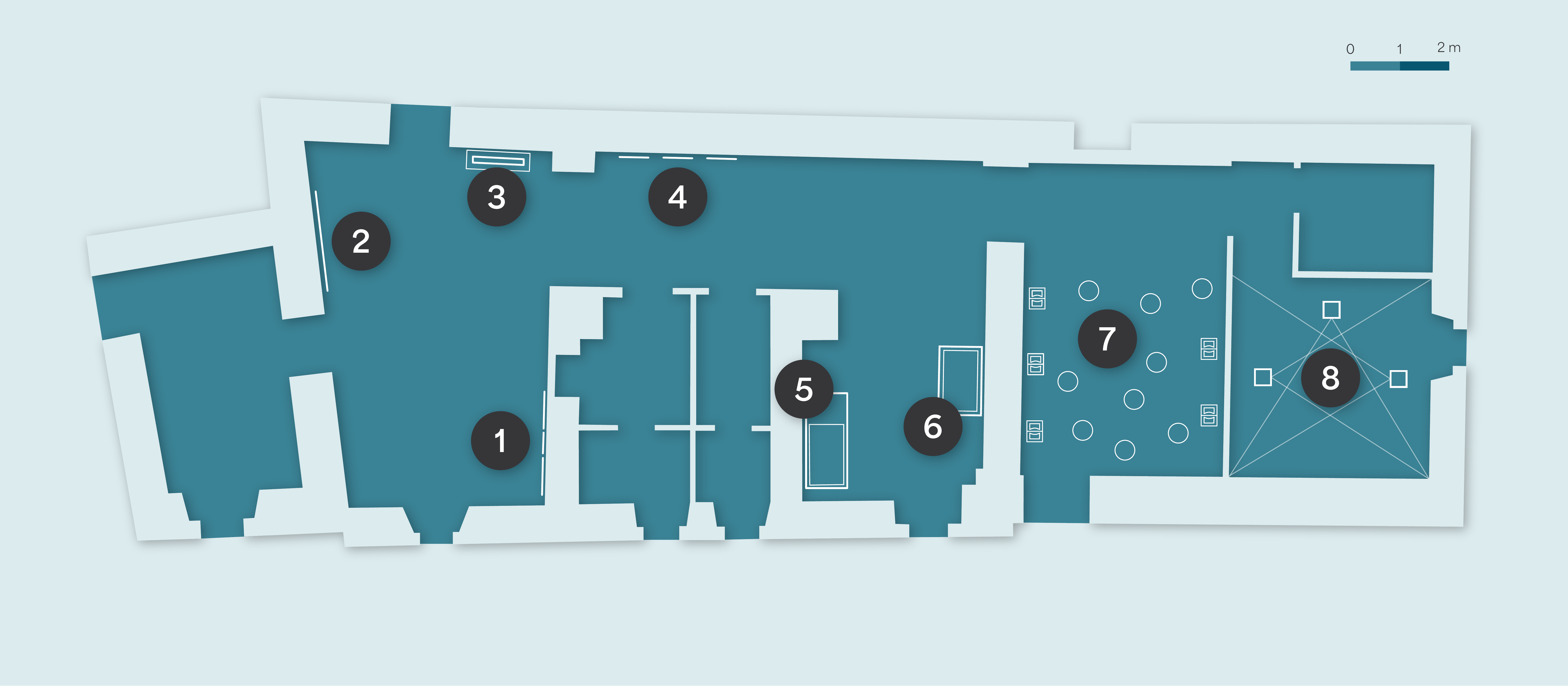
1 – Artwall
Four large monitors set up to create a scenic display make up the “Nusco and Alta Irpinia” art wall in the first room. By means of evocative images, historical and artistic photographs, postcards, and thematic background music, visitors can enjoy a multisensory journey that encourages them to discover this region. Admire architecture, local artworks, master craftsmen, nature, and pristine landscapes. Experience local faith and traditions.
2 – Introductory video
This video opens the museum tour, accompanying visitors on a journey of discovery through Nusco, its territory, and the Archdiocese. Through evocative images and engaging multi‑voice narration, the history, faith, culture and natural wonders of Irpinia are brought to life, offering a unique insight into the region’s art, communities and symbolic places.
3 – Totem
An interactive map enables visitors to find their way around and discover the cultural, spiritual and territorial identity of Alta Irpinia through a network of hotspots dedicated to places, saints and historical-devotional itineraries. The Itineraries section offers thematic routes connecting villages, natural areas, places of worship, and archaeological sites. All this encourages visitors to set off on foot and experience Irpinia as a region to journey through, explore and rediscover.
4 – Multimedia painting collection
The small painting collection located in the corridor, within gilded frames, feature portraits of bishops Pietro Paolo Parisio, Francesco Antonio Bonaventura, and Gastone Mojaisky, who were important figures in the history of Nusco and the Diocese. The three works, a mix of iconographic research and artificial intelligence, hide a secret: they talk! By approaching them and putting on the headphones, it is possible to listen to their story in their own voices. The stations are also provided with English subtitles.
5 – Narrative objects
This station is a fairy-tale corner designed for children, but open to everyone. Here, the world of miracles, legends, and myths linked to Saint Amatus comes to life. In addition to a large touchscreen table, there are eight special objects that look like picture-book covers. By placing the bases of the books on the screen, it is possible to trigger animated videos with a narration.
6 – Game of the Goose
In the educational room, you can learn while having fun! The interactive “game of the goose” station dedicated to the priestly journey of Saint Amatus is a large touch-screen table. You can play alone or in pairs: roll a virtual die and answer questions related to the square where the counter land. But beware! The path is full of surprises: unexpected events, special squares and wild cards will help you earn extra points and collect the exclusive cards from the treasure of Saint Amatus.
7 – VR Headsets
Wearing one of the 10 immersive VR headsets available in the room, visitors are transported on a unique journey through the breathtaking landscapes and iconic locations of Irpinia. This immersive experience fuses nature, history, and spirituality, unveiling hidden sights and authentic emotions. An unmissable opportunity to discover the rich cultural heritage and landscape surrounding Nusco, and become inspired by its timeless beauty.
8 – Multi-screen projection
An immersive multi-screen projection on three walls recounts the earthquakes that have affected Irpinia and Nusco over time. The narration is entrusted to Bishop Francesco Antonio Bonaventura, who was the first to rebuild the city after it was devastated in 1732. The modern era is narrated through newspaper headlines, photographs, and archival images. Here, the strength of the Nuscan community emerges: closely tied to its past, it has always looked towards the future, lovingly restoring its main historic buildings, which today symbolise memory, faith and resilience.
Discover More…
In the rooms of the Diocesan Museum, other multimedia applications enrich the visit. The statue of Sant'Amato comes to life through Artificial Intelligence, guiding visitors on a journey of discovery through the Museum and Nusco. In the library, an interactive bookshelf allows visitors to browse historical volumes on the life and works of the Saint. A documentary video, created using archival materials, reveals the fascination of the great statues, the processions, and the processional liturgy. In the nearby Church of San Giuseppe, a video feature explores the history of Fontigliano, the Lapidarium, and the Badia di Santa Maria.