

The Collections
The Diocesan Museum tells the story of the ancient dioceses of Conza, Sant'Angelo dei Lombardi, Nusco, Bisaccia, Montemarano, Monteverde and Frigento, today united into a single ecclesiastical district, through an exhibition route that brings together the artistic and historical evidence of the local communities within the territories of these ancient dioceses. The museum retains a warm, homely atmosphere typical of a "house museum", preserving the original layout of some rooms of the Bishop's Palace. In the study, the chapel and the Bishop's bedroom, the furniture and furnishings of the period are, indeed, still on display.
The complex was recently at the centre of a major renovation project, which made it possible to update the exhibition area and create new display spaces.
The itinerary opens in the reception room on the first floor. Equipped with an audio-video system, it offers an introductory overview of the history of the museum and the local area, recounting Nusco's devotion to Sant'Amato, the damage caused by the 1980 earthquake, and the community's commitment to recovering its historical and artistic heritage.
From here, moving up to the second floor, the route winds through the rooms dedicated to the individual dioceses. The works on display — including statues, paintings and liturgical furnishings from the various parishes of the Archdiocese — create a strong and continuous connection with the local communities.
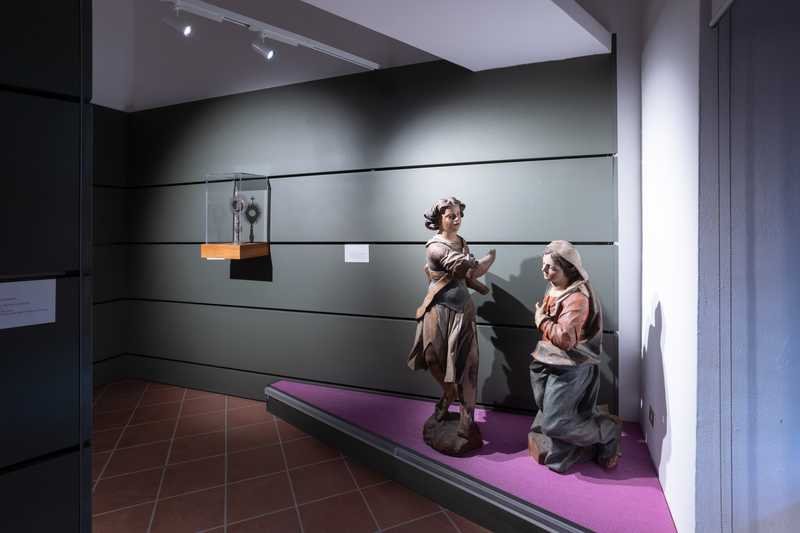
The exhibition has recently been expanded to include themed rooms dedicated to wood art, stone elements and other liturgical artefacts. The route concludes in the "Room of Processions", narrating popular devotion, processional parades and their liturgical organisation. The numerous sacred statues placed at the centre of the room bear witness to the deeply rooted popular religiosity of the area.
On the ground floor, a multimedia area engages visitors of all ages in discovering the Archdiocese through workshops and interactive spaces.
In the ancient refectory, the lapidarium houses pre-Roman, Roman and medieval finds from the area, in particular from the Fontigliano site, home to a Marian sanctuary and, in ancient times, to a Benedictine monastic settlement. The mezzanine floor houses the important restoration workshop and, together with the ground floor, is being enriched with new storage areas for the conservation of works. With the renewed Museum, Nusco strengthens its role as the cultural capital of Alta Irpinia, becoming a centre for cultural promotion in the revitalisation of the local area.