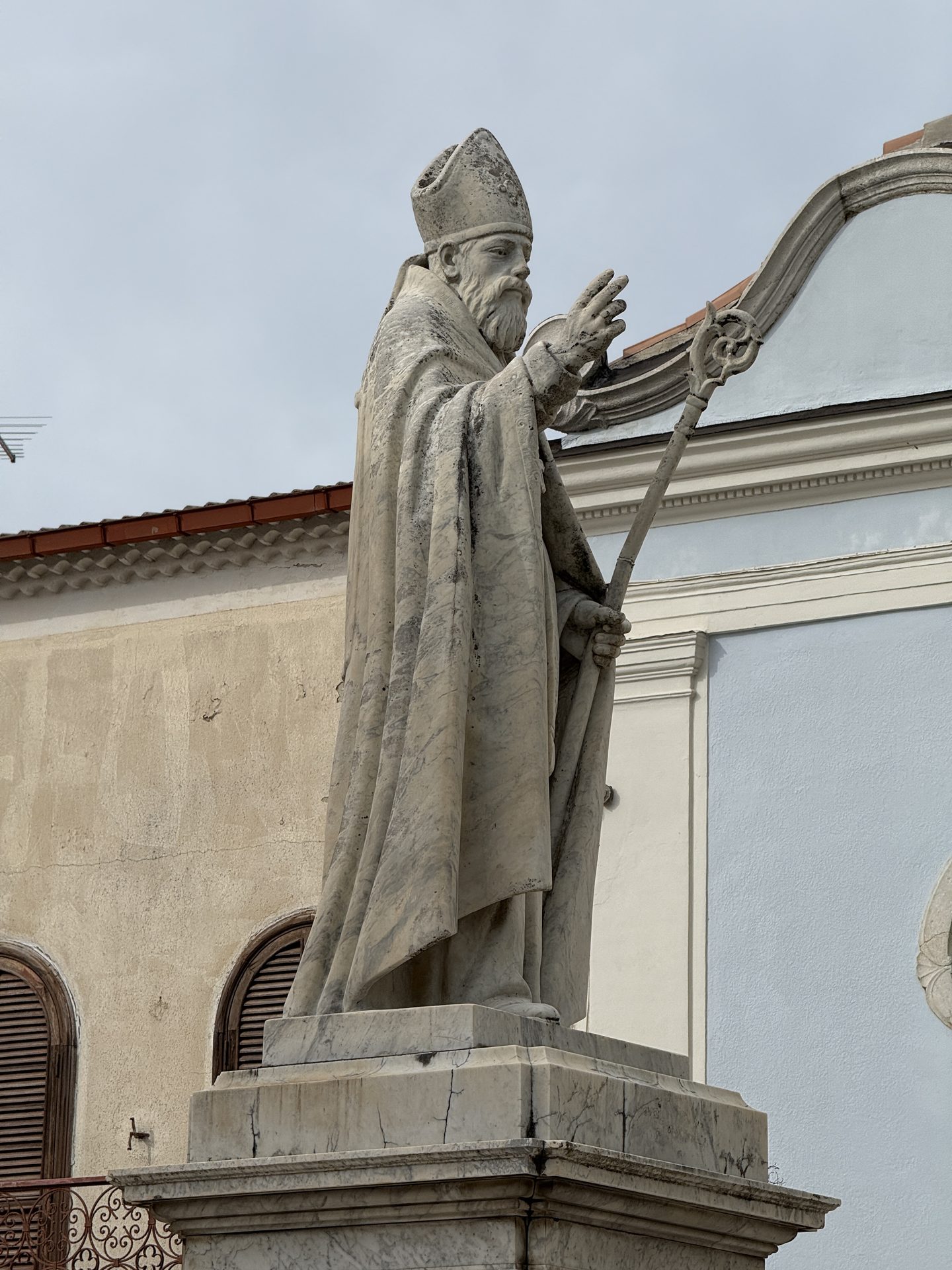
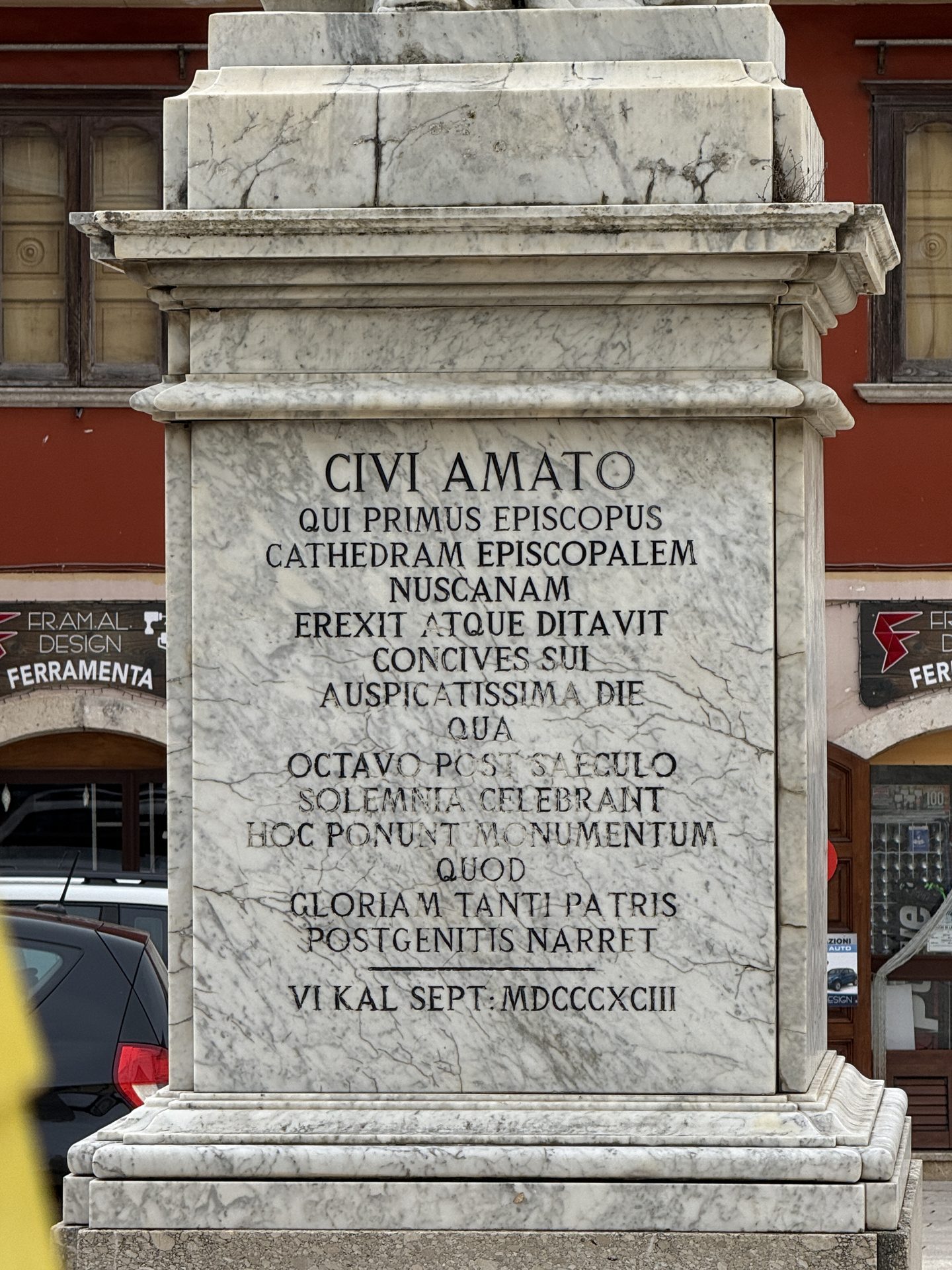
Nusco, historic centre
Set on a narrow ridge forming the watershed between the Ofanto and Calore valleys, the village (914 m, approx. 4,000 inhabitants), one of the highest in the province, is known as the 'Balcony of Irpinia' for the breadth of its views. Its historic core largely retains its medieval appearance, with streets paved in limestone. The settlement probably grew up around a fortress, of which few ruins remain, on the highest point of the hill (fine views), at the wish of St Amatus, bishop in the 11th century and the town's patron saint today, who gathered the people of the surrounding area here. The Church of Sant'Antonio, at the northern entrance to the village, has a 16th-century doorway taken from the Cathedral. The Cathedral's bell tower, also 16th-century, stands on the main square; the Cathedral itself is dedicated to Sant'Amato. Inside, the highlights are the 17th-century wooden pulpit, the work of local craftsmen; a gilded wooden bishop's throne (18th century); several 19th-century paintings; and the ceiling frescoed with biblical scenes. The crypt is Romanesque in origin (12th century), with sturdy columns supporting cross vaults. (From the Touring Club Italiano Guida Verde 'Campania'.) Not to be missed is the large and fascinating Diocesan Museum and Historical Archive (project by Verderosa studio and others). Housed in the former Bishop's Palace and the adjoining former Seminary, it holds numerous works of art and objects of historical and artistic interest, most of them rescued, thanks to the invaluable work of Monsignor Tarcisio Luigi Gambalonga, from the churches that collapsed in the 1980 earthquake.