Mefite: historical, archaeological and natural site
In midst of Italy, well known to fame,
There lies a lake (Amsanctus is the name)
Below the lofty mounts: on either side
Thick forests the forbidden entrance hide.
Full in the centre of the sacred wood
An arm arises of the Stygian flood,
Which, breaking from beneath with bellowing sound,
Whirls the black waves and rattling stones around.
Here Pluto pants for breath from out his cell,
And opens wide the grinning jaws of hell.
To this infernal lake the Fury flies;
Here hides her hated head, and frees the lab'ring skies.
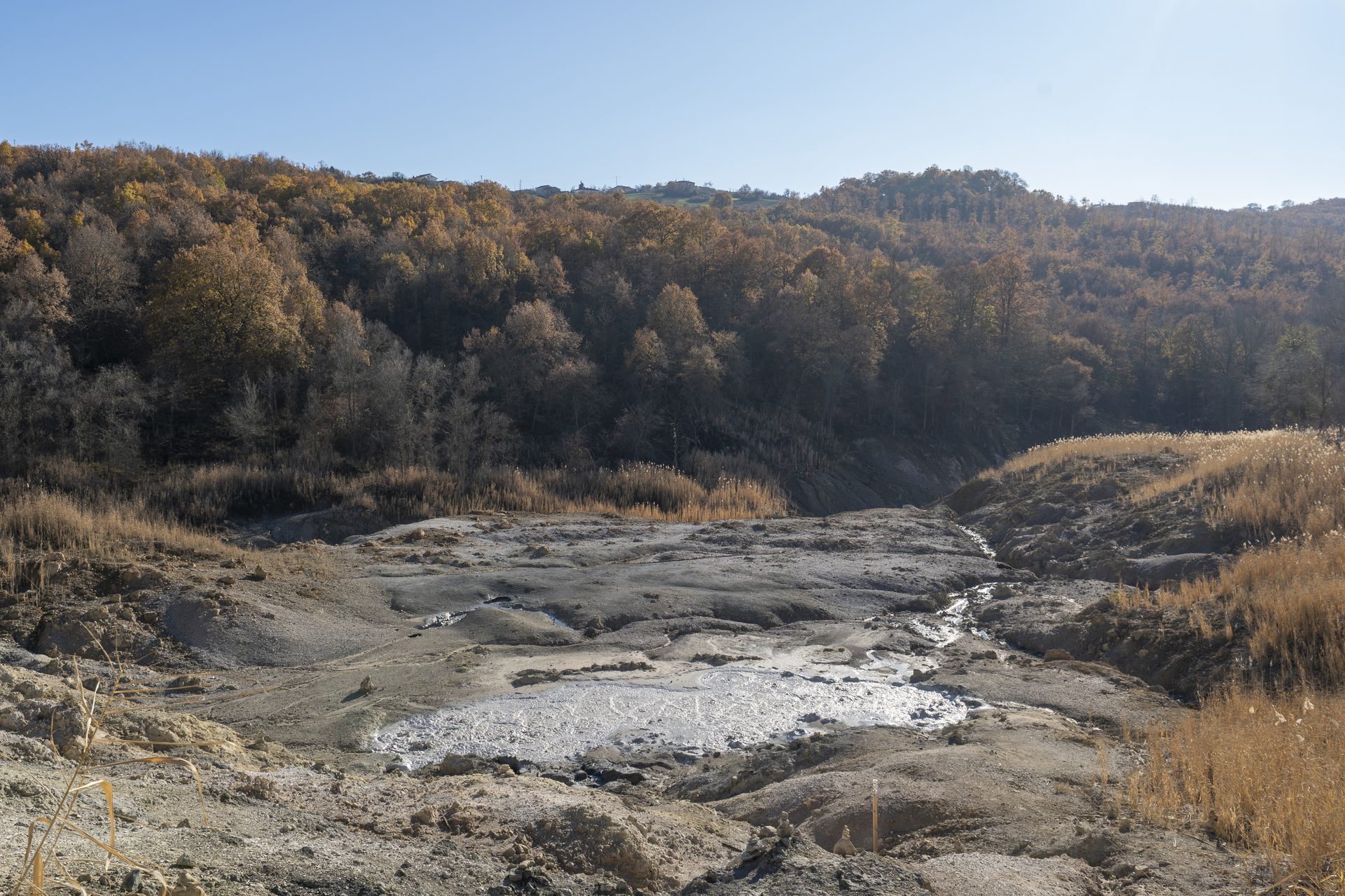
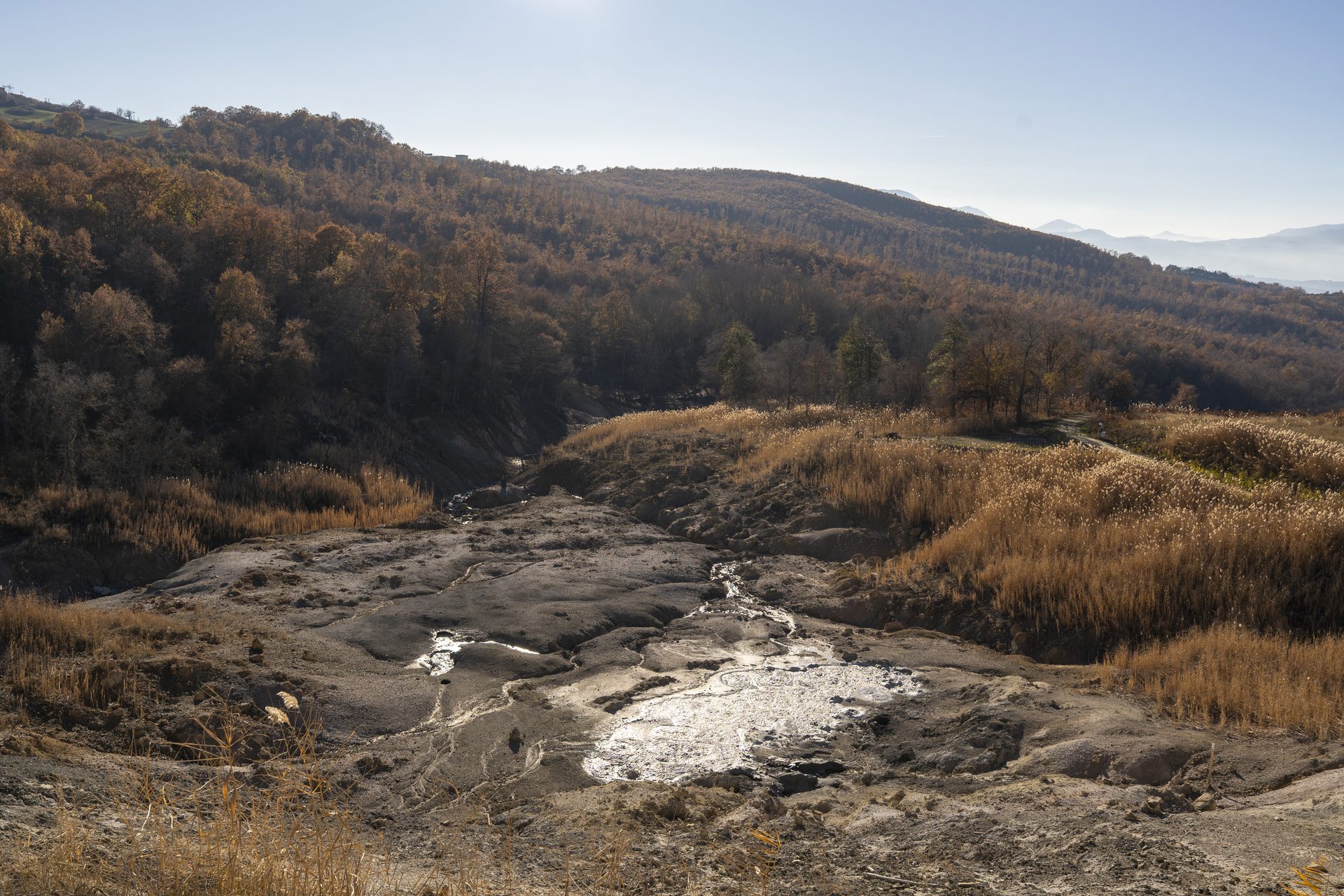
In the Ansanto valley, the heart of ancient Irpinia and the "navel of Italy" (hunc locum umbilicum Italiae chorographi dicunt, as Servius wrote in his commentary on Book VII of Virgil's Aeneid), between Campania and Puglia, lies a small lake bubbling with sulphurous vapours that make the air unbreathable: et habet aquas sulphureas, ideo graviores, quia ambitur silvis.
This place, already sacred to the Oscans and Samnites, was dedicated to the goddess Mefitis, an Italic deity linked to the cult of water and to the fertility of the earth and of human beings. A sanctuary to the mother goddess Mefitis, akin to Cybele, who was worshipped on Monte Partenio, was built on the slopes above the sulphurous area of the Ansanto valley. This is attested by remains of walls, still partly visible above ground, and by the excavation sketches and notes gathered in the late 1950s by Monsignor Nicola Gambino. In Roman times Mefitis lost her role as mother goddess and came to be seen as a malevolent deity, linked to the world of the dead, the underground and the underworld. The small sulphurous lake was identified as the passage from the earth to the underworld: Ideo autem ibi aditus esse dicitur inferorum. It was the entrance to the Hell that Dante would later journey through with Virgil and describe circle by circle. (MIC)